Ease Medical Apparatus And Instruments
Choosing among China’s top External Fixation manufacturers requires more than comparing prices or polished product catalogs. A reliable supplier should demonstrate medical-device expertise, controlled production, and consistent clinical quality. Look for ISO 13485 certification, traceable raw materials, validated sterilization processes, and clear inspection records. These details matter when a frame must remain stable beside swollen tissue, a curved pin, or a demanding fracture pattern.
Gavriil Ilizarov, the pioneering orthopedic surgeon, stated, “The quality of bone regeneration is directly proportional to the quality of the blood supply.” His principle still guides responsible External Fixation design. Manufacturers should therefore show how their pins, clamps, rods, and hinges support stability while limiting unnecessary tissue disruption. Ask for fatigue-test data, dimensional tolerances, coating information, and evidence from qualified clinical users. A serious factory should also explain complaint handling, batch recall procedures, and after-sales technical support.
No factory is perfect. A convincing website proves little. Even a technically strong supplier may communicate poorly or lack experience with your regional requirements. That weakness deserves attention. Buyers should inspect samples, audit documentation, and speak with engineers or surgeons who have used the systems. Independent verification is not distrust; it is professional discipline. This guide examines China-based manufacturers through practical experience, technical capability, quality systems, and transparent communication. The goal is not to name the cheapest source. It is to identify partners that can deliver dependable External Fixation solutions when surgical precision, traceability, and patient safety cannot be compromised.
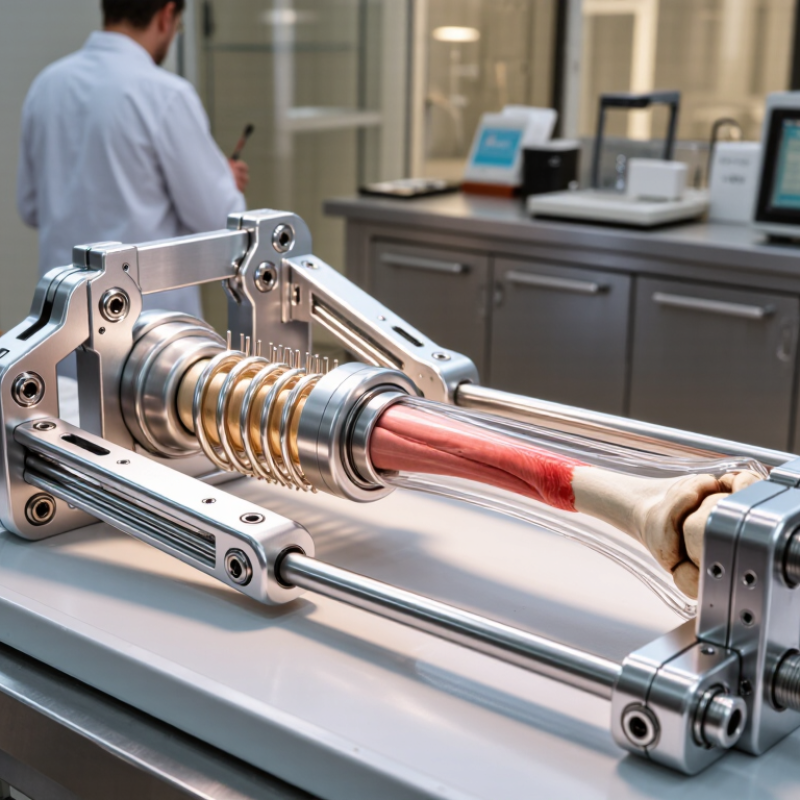
External fixation is a surgical method that stabilizes a broken or deformed bone from outside the body. Surgeons place pins or wires through the skin and connect them to external rods or rings. This structure holds bone fragments in position while healing begins. It can also protect damaged muscles, blood vessels, and skin.
Doctors often use external fixation for severe open fractures, high-energy injuries, and fractures with major swelling. It may provide temporary stability before internal surgery becomes safer.
In some cases, it supports limb lengthening, bone transport, or correction of complex deformities. The frame allows medical teams to inspect wounds without removing a large internal implant. That access matters when soft tissue needs repeated treatment.
Clinical decisions require more than choosing a strong frame. Pin placement must respect nerves, vessels, and future surgical paths. Patients also need careful cleaning, movement guidance, and regular imaging. Pin-site infection remains a practical concern. It should not be treated as a minor inconvenience. Not every frame looks elegant. Comfort, stability, and the patient’s daily routine must be considered together. The best design can still fail if follow-up is poor or instructions are unclear. Surgeons therefore assess bone quality, injury severity, skin condition, and long-term treatment goals before selecting a fixation method. Some cases remain difficult, and reasonable specialists may choose different solutions.
Trust should begin with evidence, not attractive catalogs. Check whether the manufacturer maintains a valid ISO 13485 quality system and appropriate market registrations. Ask for certificates, audit dates, and the exact legal entity named on each document. Confirm that the factory actually produces external fixation components, rather than outsourcing critical work without disclosure.
Examine the details closely. Request material certificates for stainless steel, titanium, or other specified alloys. Review dimensional tolerances, surface finishing records, sterilization controls, and fatigue-testing reports. A reliable supplier should provide batch traceability from raw material to final inspection. It should also explain how it handles nonconforming products, complaints, and corrective actions. Vague answers deserve attention.
Visit the production site when possible. Observe clean areas, calibration labels, inspection equipment, and packaging procedures. Ask to inspect samples from different production lots, not only polished samples prepared for visitors. Speak with quality and engineering staff, not just sales representatives. A capable manufacturer can discuss pin geometry, clamp strength, corrosion risks, and design changes in practical terms.
A polished website can still mislead. My own evaluation can become too focused on documents and overlook communication speed. That is a mistake. Test response quality with a clear technical request, drawings, and acceptance criteria. Compare how carefully the supplier asks questions before quoting. The cheapest offer may hide weak traceability, unstable tolerances, or limited after-sales support.
Trustworthy external fixation manufacturers are defined by measurable controls, not attractive catalogs. ISO 13485 certification should cover design, production, traceability, and corrective actions. Ask for the certificate scope and audit date. It matters.
Key products should meet applicable ISO and ASTM requirements for orthopedic implants and instruments. Common verification includes material composition, corrosion resistance, sterilization compatibility, and mechanical fatigue testing. ASTM F382 supports testing for metallic bone plates, while ISO 10993 guides biological evaluation. Pin diameter, thread geometry, and clamp locking force also need documented tolerances. A frame that feels solid on a workbench may still loosen under repeated loading.
Industry data supports careful supplier selection. A 2024 Grand View Research analysis projects the global external fixation market to expand at roughly a mid-single-digit CAGR through 2030. This growth increases production pressure. It does not prove quality. Factory capability should include CNC machining, controlled heat treatment, surface inspection, and batch-level identification. Ask for tensile, torque, and fatigue reports from recent lots, not only sample reports. Manufacturing experience helps, but it can also create blind spots. Some suppliers underinvest in usability testing, especially for emergency assembly. That weakness deserves attention.
Reliable factories maintain incoming inspection records, process validation files, and complaint-response timelines. They should explain how nonconforming pins are isolated and how design changes are approved. Independent laboratory testing adds confidence, although it cannot replace factory discipline. A practical audit should inspect clean areas, calibration labels, packaging seals, and real production records. Photos are not enough.
| Evaluation Dimension | Relevant Requirement or Standard | Verified Manufacturing Capability | Evidence to Request |
|---|---|---|---|
| Quality management system | ISO 13485:2016 for medical-device quality management, with documented design, production, supplier-control, and corrective-action procedures. | Controlled procedures covering incoming inspection, in-process inspection, final release, nonconforming-product control, and complaint handling. | Current certificate, certification scope, audit information, quality manual index, and sample inspection records. |
| Risk management | ISO 14971-based risk-management activities throughout the product life cycle. | Documented hazard analysis for pin breakage, loosening, loss of fixation, corrosion, incompatibility, and misuse. | Risk-management report, hazard analysis, risk-control matrix, and post-market feedback process. |
| Product scope | External skeletal fixation systems may include clamps, rods, rings, hinges, fixation pins, wires, posts, and related instruments. | Ability to manufacture compatible system components with controlled interfaces, dimensions, and assembly tolerances. | Product drawings, interface specifications, component lists, assembly instructions, and compatibility data. |
| Mechanical performance | ASTM F1541 provides specifications and test methods for external skeletal fixation devices. | Mechanical testing of frame stiffness, clamp security, connection strength, tightening performance, and component durability. | Test protocols, acceptance criteria, calibration records, raw data, and final test reports. |
| Metal material selection | Common implant-grade materials include stainless steel conforming to applicable implant-material specifications and titanium alloy Ti-6Al-4V ELI commonly specified to ASTM F136. | Material-controlled machining, heat-treatment control where applicable, surface finishing, and segregation of material grades. | Material certificates, heat or lot traceability, chemical-composition reports, and mechanical-property certificates. |
| Precision machining | Critical dimensions must be defined by approved drawings, tolerances, and functional requirements rather than by general machining claims. | CNC turning and milling, drilling, tapping, deburring, dimensional inspection, and controlled assembly of small mechanical components. | Process-flow chart, equipment list, capability studies, first-article inspection, and calibrated measurement records. |
| Surface treatment | Surface treatment must be selected for corrosion resistance, cleanability, wear behavior, and biological safety. | Passivation for stainless steel and controlled anodizing or other qualified treatments for titanium components where specified. | Validated process parameters, surface-finish specifications, corrosion-test results, and subcontractor qualification records. |
| Biocompatibility | ISO 10993 evaluation should be based on the device materials, tissue contact, duration of contact, processing residues, and intended use. | Material and process controls designed to minimize residues, particulates, extractables, and surface contamination. | Biological-evaluation plan, material declarations, test reports where required, and chemical-characterization information. |
| Cleaning and particulate control | Cleaning processes must be validated or verified according to the device design, residues, intended use, and supplied condition. | Ultrasonic or aqueous cleaning, controlled rinsing, drying, visual inspection, and particulate-control procedures. | Cleaning validation or verification report, residue limits, water-quality records, and environmental-monitoring procedures. |
| Sterilization capability | For sterile products, applicable validation standards may include ISO 11135 for ethylene oxide and ISO 11137 for radiation sterilization. | Validated sterilization route or qualified sterilization-service control, with defined load configuration and routine monitoring. | Sterilization validation summary, routine release records, biological or dosimetry records, and sterility-maintenance data. |
| Packaging and shelf life | ISO 11607 is relevant to packaging systems for terminally sterilized medical devices. | Pouch, tray, or rigid-packaging design with seal control, protective layout, transport qualification, and aging evaluation where applicable. | Packaging specifications, seal-strength results, integrity testing, transport testing, and accelerated or real-time aging data. |
| Traceability | Each finished device or production lot should be traceable to materials, processing, inspection, release, and distribution records. | Lot or batch identification, controlled labeling, production-history records, and documented recall capability. | Sample device history record, labeling artwork, lot-traceability procedure, and recall mock-test results. |
| Design and customization | Customized products require controlled design inputs, verification, validation, change control, and approval before production. | Engineering support for dimensions, clamp geometry, rod diameter, hole patterns, instrumentation, packaging, and private-label documentation. | Design-control procedure, revision history, prototype records, verification plan, and engineering-change documentation. |
| Regulatory documentation | Documentation should match the destination market, device classification, intended use, and local registration requirements. | Preparation of technical files, declarations, instructions for use, product specifications, and supporting test documentation. | Regulatory certificates, technical documentation index, declaration documents, labeling samples, and market-specific registration support. |
| Supplier and subcontractor control | Critical suppliers and outsourced processes must be evaluated, approved, monitored, and controlled within the quality system. | Documented control of material suppliers, surface-treatment providers, sterilization services, packaging suppliers, and testing laboratories. | Approved-supplier list, supplier audits, quality agreements, incoming inspection plans, and subcontractor certificates. |
| After-sales and post-market support | Complaint handling, vigilance reporting, corrective actions, and post-market surveillance should be defined for the target market. | Structured response process for product complaints, field issues, investigation, root-cause analysis, and corrective action. | Complaint procedure, response-time policy, corrective-action examples, field-safety process, and customer-service contacts. |
China’s external fixation suppliers generally fall into three practical types: trauma-focused manufacturers, OEM/ODM factories, and specialized machining suppliers. Trauma manufacturers usually offer modular frames, clamps, pins, and instruments for emergency stabilization. OEM/ODM factories can adapt hole spacing, rod length, and packaging for hospital or distributor requirements. Machining specialists often produce small-batch components with tighter dimensional control.
Demand remains substantial. The World Health Organization reports about 1.19 million road-traffic deaths each year, with 20–50 million nonfatal injuries. Many involve fractures or limb trauma. Grand View Research also identifies trauma care and orthopedic reconstruction as important drivers of external fixation demand. These figures do not prove supplier quality. They only show why dependable production matters.
Tips: Ask for ISO 13485 certification, batch traceability, material certificates, and sterilization validation records. Request recent inspection reports, not only catalog images. Check pin-thread accuracy, clamp locking force, surface finish, and corrosion resistance. A factory audit should include incoming-material checks and final inspection. Low pricing may improve purchasing efficiency, but it can hide inconsistent tolerances. I have seen specifications look complete while clinical-use details remain vague. That is a warning, not a minor gap. Also review complaint handling, sample consistency, and change-control procedures before placing volume orders. Be careful with impressive claims; measurable evidence is more useful.
A polished website proves very little. Ask for the manufacturer’s legal registration, quality certificates, and production scope. Confirm that the documents match the actual factory address. A valid ISO 13485 certificate is useful, but it is not enough. Check its scope, expiry date, and issuing body. Request recent audit records when possible.
Examine the external fixation system closely. Review material certificates for stainless steel, titanium, or other stated alloys. Ask how each pin, clamp, and connector is inspected. Reliable manufacturers should explain dimensional tolerances, surface treatment, packaging, and batch traceability. Request sample products before placing a large order. Measure thread quality. Check clamp movement. Inspect the packaging seals.
Visit the factory, or arrange an independent inspection. Watch how workers record defects and separate rejected parts. Ask about sterilization controls, complaint handling, and product recalls. Speak with hospitals or distributors that have used the system in practice. Their feedback may reveal delays, inconsistent components, or weak technical support.
I once treated a polished factory tour as stronger evidence than it was. That was a mistake. A second inspection exposed gaps in inspection records.
Do not rely on one impressive meeting. Compare samples, documents, production records, and delivery performance. A manufacturer that welcomes detailed questions is usually easier to evaluate, though openness alone cannot replace evidence.
External fixation stabilizes a broken or deformed bone outside the body. Pins or wires connect the bone to rods or rings. The frame holds bone fragments steady during healing.
Doctors often use it for severe open fractures, major swelling, and high-energy injuries. It can protect damaged skin, muscles, and blood vessels. The frame may also support complex deformity correction.
Yes. It may provide stability before internal surgery becomes safer. This approach gives swollen tissues time to recover. The timing still depends on the patient’s condition.
In selected cases, it supports limb lengthening and bone transport. It can also help correct difficult deformities. These treatments require regular imaging and careful medical supervision.
Suppliers commonly include trauma-focused manufacturers, OEM or ODM factories, and precision machining companies. Trauma manufacturers often provide modular frames, clamps, pins, and instruments. Machining specialists may handle small batches with tighter dimensional control.
Request quality certification, batch traceability, material certificates, and sterilization validation records. Ask for recent inspection reports. Catalog images are not enough. Check pin-thread accuracy, clamp locking force, surface finish, and corrosion resistance.
Pin-site infection remains a serious concern. Cleaning routines and movement guidance matter. Regular follow-up is essential. A stable frame can still fail when instructions are unclear or care is inconsistent.
Review incoming-material checks, final inspection, complaint handling, and change-control procedures. Compare multiple production samples. Low pricing may hide uneven tolerances. A complete specification can still leave clinical details unclear. That gap deserves attention.
External Fixation is a valuable orthopedic treatment method that uses pins, wires, rods, and frames positioned outside the body to stabilize fractures, correct deformities, or support bone lengthening. Because these systems may be used in complex clinical situations, selecting a dependable Chinese manufacturer requires more than comparing prices. Buyers should assess the supplier’s product range, engineering expertise, material quality, production consistency, and ability to provide different frame configurations for various surgical needs.
A reliable evaluation should include verification of applicable quality management systems, product testing procedures, traceability controls, sterilization compatibility, and technical documentation. It is also important to review manufacturing facilities, inspection equipment, customization capabilities, export experience, and after-sales communication. Before placing an order, buyers should request samples, certifications, test reports, clear specifications, and references where appropriate. A careful audit and transparent verification process can help identify manufacturers that offer stable quality, responsive service, and products suitable for professional medical use.
